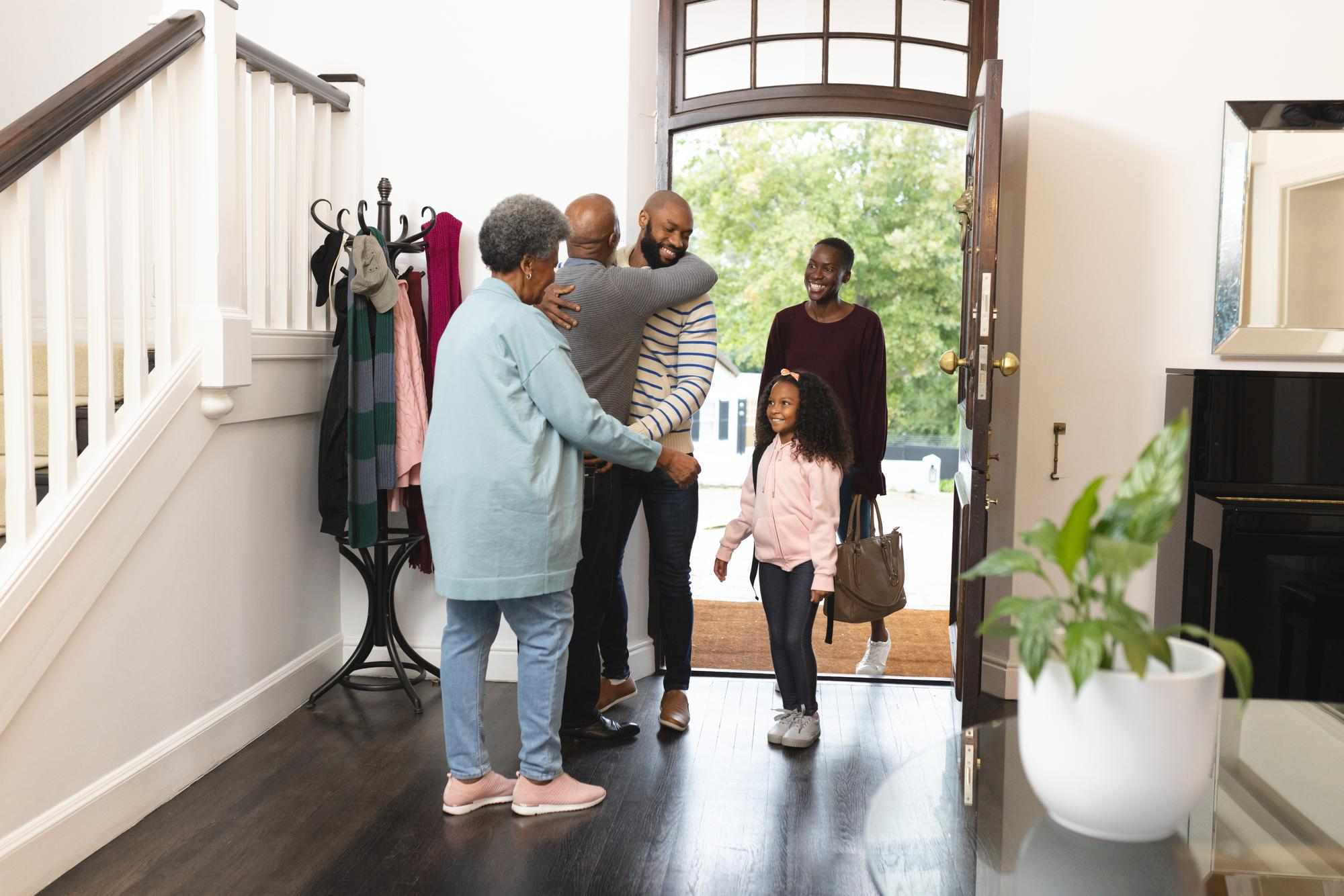
There is a familiar scene that plays out in almost every household. A friend texts to say they are stopping by in an hour, and suddenly the vacuum is out, the dishes are done, and that pile of mail on the counter finally gets sorted. Yet the day before, that same pile sat untouched and the same rug went unvacuumed without a second thought. Why does a doorbell do what our own daily comfort could not?
This pattern is one of the most relatable quirks of home life, and it says less about laziness and more about how our minds work. Understanding it can actually help us build cleaner, calmer homes for ourselves, not just for the people who visit.
The Psychology of Social Perception
Humans are social creatures, and much of our behavior is shaped by how we believe others perceive us. Studies have shown that people consistently alter their environment and behavior when they know they are being observed or evaluated. A tidy home signals order, care, and competence to a visitor. It becomes a quiet form of communication, almost like the way we choose an outfit before an event.
When we clean before guests arrive, we are not just clearing surfaces. We are managing an impression. Our brains treat that upcoming visit as a kind of performance review, even if no one is actually judging us that closely. The result is a burst of motivation that can turn a cluttered living room into a guest ready space in record time.
When we are alone, that social pressure disappears. There is no audience, so the mental urgency that drives us to act quietly fades into the background, even though the clutter itself has not changed at all.
Why Accountability Changes Behavior
Accountability is one of the strongest motivators of human behavior, and it works quietly in the background of daily life. When someone else is going to see the result of our effort, we hold ourselves to a higher standard. This is the same reason people tidy up before a house cleaner arrives, or straighten their desk before a coworker stops by.
Without accountability, the standard we hold ourselves to often slips. Not because we do not care about our space, but because there is no external checkpoint reminding us that it matters right now. The bar quietly lowers when no one else is watching, and small tasks get pushed to later, then later again.
This is worth noticing, because it reveals something important. The motivation was always there. It just needed a trigger. The goal is learning how to create that same sense of care for ourselves, without needing a guest on the way.
Why We Normalize Our Own Clutter
There is a phenomenon sometimes called perceptual blindness, where the longer we look at something, the less we actually notice it. A stack of papers on the counter becomes part of the scenery within a few days. The shoes by the door blend into the floor. This is not a lack of care, it is simply how the brain conserves energy by filtering out familiar, unchanging details
.
Over time, small piles of clutter accumulate into a version of normal that we stop questioning. We walk past the same pile every day until it becomes invisible, and invisible clutter is much harder to feel motivated to clear. It takes an outside perspective, like a guest walking through the front door for the first time, to break that blindness and see the space freshly again.
Recognizing this pattern is powerful. It means the mess is not a reflection of who we are, it is simply a side effect of familiarity. And familiarity can be interrupted on purpose.
How to Create a Home That Feels Good for You, Not Just Visitors
The goal is not to live in a constant state of guest ready perfection. That is exhausting and unrealistic. The goal is to build a home that feels calm and comfortable for the person who actually lives there every single day, which is you.
A few shifts can help close the gap between how we treat our space for others and how we treat it for ourselves.
- Treat yourself like an honored guest.
- Reset one high traffic area daily, such as the kitchen counter or entryway.
- Walk through your home occasionally as if seeing it for the first time.
- Set a recurring cleaning schedule so tidiness is not dependent on outside pressure.
- Let a professional cleaning service handle the deep resets so the baseline stays high.
Practical Mindset Shifts
Changing this pattern starts with a simple reframe. Instead of asking, would this be embarrassing if someone saw it, try asking, does this space help me feel calm and rested. That question centers your own wellbeing rather than an imagined observer.
It also helps to build small rituals that mimic the accountability of a guest visit. Some people set a weekly reminder to walk through their home with fresh eyes. Others invite a friend over on a regular basis, using the visit as a built in reason to stay consistent. Both approaches borrow the same psychological trigger that already works, just on our own terms.
Studies have shown that consistent, moderate maintenance is far less draining than sporadic deep cleans driven by stress or last minute pressure. A home that stays gently tidy day to day requires less mental and physical effort overall than one that swings between neglect and frantic cleanup.
There is also real value in outside support. A professional cleaning visit works much like a guest, in the sense that it creates a natural reset point. Knowing your cleaning team is coming can motivate a light pickup beforehand, and the deep clean they provide raises your everyday baseline, so the version of home you live in daily starts to look more like the version you present to visitors.
At the end of the day, the instinct to clean for guests is not a flaw. It shows that we already know how to create a welcoming, cared for space. The opportunity is extending that same care inward, so the home you return to every evening feels just as good as the one you present at the front door.
Ready for a home that feels good every single day, not just when company is coming? Book a Quicklyn cleaning today and let us help you raise your everyday baseline.
Leave a Reply
You must be logged in to post a comment.