Blog

  • The Cleaning Details That Influence Reviews Most (NYC Hosting Guide)

    The Cleaning Details That Influence Reviews Most (NYC Hosting Guide)

    Airbnb guests decide their first impression within 30 seconds. Learn the cleaning details that impact reviews most, from smell to entryway presentation.

  • Why More New Yorkers Are Outsourcing Cleaning Instead of Their Free Time

    Why More New Yorkers Are Outsourcing Cleaning Instead of Their Free Time

    Your Sunday Might Be More Expensive Than You Think

    Most New Yorkers don’t think of Sunday as “time.”

    They think of it as:

    • laundry day
    • cleaning day
    • reset-the-apartment day
    • catch-up-on-life day

    It feels productive.

    Responsible.

    Necessary.

    But there’s a hidden cost nobody calculates.

    Your only real day off in the week is being spent maintaining the life you didn’t have time to live.

    So the real question is not:

    “Should I clean today?”

    It’s:

    What is my Sunday actually worth?

    The NYC Time Equation No One Talks About

    Let’s break it down.

    A typical weekday in New York City looks like this:

    Work Hours

    8–10 hours (often more in reality)

    Commute Time

    1–2 hours round trip (depending on location)

    Recovery Time

    Cooking, errands, winding down: 2–3 hours

    By Friday night, most New Yorkers aren’t entering the weekend energized.

    They’re entering a recovery window.

    And that recovery window is fragile.

    Then Sunday Arrives

    Sunday is supposed to feel different.

    But for many people, it becomes:

    • laundry backlog
    • apartment cleaning
    • grocery restock
    • life admin catch-up
    • preparation for Monday

    Instead of rest, it becomes maintenance.

    And maintenance doesn’t feel like freedom.

    It feels like delayed work.

    Sunday in NYC Isn’t Even Quiet Anymore

    Sundays used to feel like recovery.

    Now they often look like this:

    • FIFA matches on in the background
    • Friends dropping by “for just one game”
    • Food delivery arriving mid-clean
    • Trying to reset the apartment between moments of life happening

    Even your “rest day” has become social.

    Which means cleaning doesn’t just compete with chores anymore.

    It competes with real-time living.

    And that makes it even harder to finish.

    The Hidden Equation: Time vs. Cleaning

    Let’s be honest about what cleaning actually costs.

    A “quick” Sunday reset often includes:

    • 30–60 minutes of laundry
    • 30 minutes of dishes and kitchen reset
    • 30–45 minutes of vacuuming and surfaces
    • 20–30 minutes of organizing clutter

    That’s 2–3 hours minimum.

    Now multiply that by four Sundays a month.

    That’s nearly a full workday every week spent maintaining your space.

    And most of it happens during the only time you could actually rest.

    The Real Question: Is It Worth It?

    Not morally.

    Not practically.

    But personally.

    Is spending your only free day:

    • scrubbing
    • sorting
    • resetting
    • catching up

    the best use of your time in a city that never slows down?

    For some people, yes.

    For more and more New Yorkers, the answer is shifting.

    No.

    Why This Shift Is Happening Now

    The “Lost Sunday” problem didn’t exist in isolation.

    It’s a result of how life in NYC has evolved.

    1. Longer working hours

    Work doesn’t always stop at 5 PM anymore.

    2. Hybrid work blur

    Home is now also the office.

    3. Faster social life

    Weekends fill up quickly with plans.

    4. Constant mental load

    Even resting feels like something you need to schedule.

    The result?

    Sunday becomes the only buffer.

    And buffers get consumed first.

    The Rise of Outsourced Living

    This is where a noticeable shift is happening in NYC.

    People are outsourcing:

    • grocery shopping
    • food preparation
    • laundry services
    • dog walking
    • cleaning

    Not because they can’t do these things.

    But because doing everything themselves is no longer sustainable.

    Time has become the more valuable resource.

    Cleaning Isn’t the Real Product

    This is where most services misunderstand their value.

    People don’t pay for cleaning.

    They pay for what comes after:

    • a free Sunday
    • a clear mind
    • a reset apartment
    • the ability to rest without guilt
    • a weekend that actually feels like a weekend

    The service is physical.

    The benefit is psychological.

    What a “Paid Sunday” Actually Buys You

    When you remove cleaning from your weekend, something interesting happens.

    You don’t just get time back.

    You get:

    • slower mornings
    • uninterrupted rest
    • time for relationships
    • time for hobbies
    • time for nothing at all (which matters most)

    In a city like New York, “nothing” is becoming a luxury.

    The Psychology of Rest Debt

    When Sundays are spent cleaning, your brain never fully resets.

    You start Monday already slightly behind:

    • unfinished tasks
    • mental clutter
    • lingering fatigue

    This creates what can be described as rest debt.

    And it compounds over time.

    Why NYC Makes This Worse

    New York accelerates everything:

    • work intensity
    • social expectations
    • living costs
    • daily pace

    Even downtime feels structured.

    Which is why Sunday becomes the pressure release valve for everything else.

    But pressure valves aren’t meant to carry the entire system.

    The Real Luxury in NYC Today

    It’s not space.

    It’s not possessions.

    It’s not even money.

    It’s time that is fully yours.

    Uninterrupted.

    Unassigned.

    Unclaimed by chores.

    Final Thoughts

    The Cost of a Lost Sunday isn’t just about cleaning.

    It’s about what that time could have been instead.

    Rest.

    Recovery.

    Connection.

    Stillness.

    Or simply doing nothing without guilt.

    Because in New York City, the most expensive thing you can lose isn’t money.

    It’s the only day you had to yourself.

    And once you start calculating it that way…

    outsourcing doesn’t feel like a luxury anymore.

    It feels like a decision.

  • Why We Clean More Before Guests Than We Do For Ourselves

    Why We Clean More Before Guests Than We Do For Ourselves

    Nobody Cleans Faster Than a New Yorker Who Just Got the Text:

    “I’m downstairs.”

    Suddenly, you have energy.

    The dishes disappear.

    Blankets get folded.

    The chair covered in clothes becomes an emergency.

    You wipe the counter, fluff the pillows, and somehow make the apartment look respectable in under 10 minutes.

    The strange part?

    You’ve walked past the same mess all week.

    So why does one text message change everything?

    The answer has very little to do with cleaning.

    And almost everything to do with being human.

    The Great NYC Apartment Illusion

    New Yorkers live in some of the busiest cities—and often, some of the smallest apartments—in the world.

    Our homes are more than homes.

    They’re:

    • Offices
    • Dining rooms
    • Entertainment spaces
    • Guest rooms
    • Gyms
    • Sometimes all in the same day

    As a result, apartments naturally become lived in.

    But then someone announces they’re coming over.

    And suddenly the apartment becomes something else:

    A reflection of us.

    Why We Clean More for Guests Than Ourselves

    It comes down to one powerful psychological principle:

    We don’t just want people to see our home.

    We want them to see us in a certain way.

    A clean apartment quietly communicates:

    • I’m organized.
    • I have my life together.
    • I’m responsible.
    • I’m doing okay.

    Even if none of those things feel entirely true that week.

    The apartment becomes part of our first impression.

    First Impressions Happen Fast

    Studies have consistently shown that people make impressions incredibly quickly.

    Within moments, people notice:

    • Cleanliness
    • Organization
    • Smell
    • Visual clutter
    • Overall atmosphere

    Whether we realize it or not, we prepare our apartments because we understand something deeply human:

    Our environment tells a story about us.

    Why We Tolerate the Same Mess Ourselves

    Here’s the interesting part.

    The laundry pile doesn’t suddenly become more annoying because someone is visiting.

    The dishes don’t magically become dirtier.

    The clutter hasn’t changed.

    Our attention has.

    When we live in a space every day, our brains adapt.

    Psychologists call this habituation.

    We stop noticing certain things because they’ve become familiar.

    Until someone else is about to see them.

    Then suddenly, everything becomes visible again.

    The “I’m Downstairs” Effect

    Every New Yorker knows this moment.

    A text appears:

    “I’m downstairs.”

    Panic.

    Suddenly, you notice:

    • The shoes by the door
    • The dishes in the sink
    • The package that’s been there for four days
    • The hoodie on the chair
    • The coffee table that somehow became storage

    You move faster than you have all week.

    Because now you’re seeing the apartment through someone else’s eyes.

    Why Hosting Anxiety Is So Common in NYC

    Part of this is cultural.

    New York apartments are personal.

    They’re small.

    They’re expensive.

    They’re often imperfect.

    Which means inviting someone into your space can feel surprisingly vulnerable.

    Questions start appearing:

    • Is it clean enough?
    • Is it too cluttered?
    • Does it feel welcoming?
    • What will they think?

    Most people aren’t worried about the apartment.

    They’re worried about the impression.

    The Apartment as Identity

    Our homes have become extensions of ourselves.

    Especially in cities like New York where space is limited and every square foot matters.

    People often see their apartments as a reflection of:

    • Success
    • Stability
    • Lifestyle
    • Personality

    Which explains why people are willing to clean for 20 minutes before guests arrive…

    …while happily ignoring the same mess on a random Tuesday.

    The Bigger Question

    What if we treated ourselves like guests?

    What if we reset our apartments because we deserved a calmer environment?

    Not because someone was coming over.

    Not because we wanted to impress anyone.

    Just because our future selves would appreciate it.

    Why a Reset Feels So Good

    The reason a clean apartment feels satisfying isn’t perfection.

    It’s relief.

    Visual clutter requires attention.

    Even when we’re not actively thinking about it.

    When the environment feels calmer:

    • Decisions feel easier
    • Stress feels lower
    • The apartment feels more spacious
    • We feel more settled

    Sometimes the biggest beneficiary of cleaning isn’t the guest.

    It’s the person who lives there.

    Final Thoughts

    The next time you find yourself speed-cleaning because someone texted, “I’m downstairs,” remember:

    You’re not strange.

    You’re human.

    We all want our spaces to tell a good story.

    But maybe the real NYC apartment illusion is this:

    We often create calm for our guests faster than we create it for ourselves.

    And perhaps we deserve that same effort too.

    Because the person spending the most time in your apartment…

    is you.

  • Why New Yorkers Are Paying for Convenience More Than Ever

    Why New Yorkers Are Paying for Convenience More Than Ever

    The Most Valuable Thing in New York Isn’t Space. It’s Time.

    Or maybe it’s energy.

    Actually, it’s probably both.

    Because if you’ve lived in New York City long enough, you’ve probably noticed something:

    People are paying for convenience more than ever.

    Groceries are delivered.

    Dinner arrives at the door.

    Laundry gets picked up.

    Dogs get walked.

    Apartments get cleaned.

    And despite countless apps promising to save time, people somehow feel busier than ever.

    Which raises an interesting question:

    What exactly are New Yorkers paying for?

    The answer isn’t groceries.

    Or laundry.

    Or cleaning.

    They’re paying for something much harder to replace.

    Mental bandwidth.

    Welcome to the Reset Economy

    A few years ago, outsourcing everyday tasks felt like a luxury.

    Today, it’s becoming a necessity.

    We’re entering what many people are calling the “Reset Economy.”

    An economy where people increasingly pay for services that help them:

    • reduce stress
    • save time
    • simplify life
    • recover energy
    • regain control of their schedules

    The product isn’t the task itself.

    It’s the feeling that comes afterward.

    Relief.

    Why This Is Happening Now

    Life hasn’t necessarily become harder.

    It’s become fuller.

    The average New Yorker is managing:

    • work responsibilities
    • relationships
    • social plans
    • fitness goals
    • side projects
    • family obligations
    • constant digital notifications

    Every day requires hundreds of small decisions.

    And every decision uses energy.

    Psychologists often refer to this as decision fatigue.

    By the end of the day, many people aren’t physically tired.

    They’re mentally exhausted.

    Why Convenience Is Becoming a Lifestyle Investment

    People often ask:

    “Why would someone pay for grocery delivery?”

    Or:

    “Why hire a cleaner?”

    The better question might be:

    “What is the cost of doing everything yourself?”

    Sometimes the cost is:

    • your Sunday afternoon
    • your evening energy
    • your ability to fully relax
    • your attention for things that matter more

    Convenience isn’t replacing effort.

    It’s reallocating it.

    The New Luxury Isn’t More Stuff

    For years, luxury was defined by ownership.

    A bigger apartment.

    More possessions.

    More things.

    Today, luxury looks different.

    Luxury is:

    • having your Saturday free
    • not spending the evening doing laundry
    • walking into a reset apartment
    • getting an hour back to yourself

    Time has become the ultimate premium product.

    The Five Services New Yorkers Are Outsourcing Most

    1. Groceries

    Not because people can’t shop.

    Because spending two hours in a grocery store often feels more expensive than paying a delivery fee.

    2. Food Delivery

    People aren’t just buying food.

    They’re buying convenience after a long workday.

    3. Laundry

    The task itself isn’t difficult.

    The time commitment is.

    4. Dog Walking

    Many professionals simply don’t have the flexibility their pets deserve.

    5. Cleaning Services

    This one has changed dramatically.

    People no longer view apartment cleaning NYC services as an occasional luxury.

    Increasingly, they see it as a lifestyle support system.

    Because the real benefit isn’t a clean apartment.

    It’s the mental reset that comes with it.

    The Hidden Cost of Doing Everything Yourself

    New Yorkers are incredibly capable.

    But capability doesn’t equal capacity.

    You can do everything.

    The question is:

    Should you?

    Trying to manage every task personally often creates:

    • burnout
    • decision fatigue
    • less free time
    • increased stress
    • constant feelings of being behind

    Sometimes paying for convenience isn’t spending money.

    It’s buying back attention.

    Why This Matters More in NYC

    The city itself creates pressure.

    Long commutes.

    Small apartments.

    Busy schedules.

    Constant opportunities.

    A social calendar that never really slows down.

    Even summer adds another layer:

    • rooftop gatherings
    • concerts
    • friends visiting
    • FIFA watch parties
    • more hosting
    • more movement

    Everything accelerates.

    Which means the need for resets becomes even greater.

    The Psychology of the Reset

    People often describe a clean apartment the same way:

    “I can finally breathe.”

    That’s not really about cleanliness.

    It’s about reduced cognitive load.

    When your environment feels calmer:

    • your brain processes less information
    • decisions feel easier
    • stress decreases
    • attention improves

    The apartment hasn’t changed your life.

    It’s simply removed one source of friction.

    Why the Reset Economy Is Here to Stay

    The demand for convenience isn’t a trend.

    It’s a response.

    A response to:

    • busier schedules
    • increased mental load
    • higher expectations
    • limited time

    As life becomes more complex, people are increasingly willing to pay for simplicity.

    Not because they’re lazy.

    Because their attention has become valuable.

    Final Thoughts

    The rise of the Reset Economy isn’t really about outsourcing chores.

    It’s about understanding that time, attention, and energy are limited resources.

    The most successful New Yorkers aren’t necessarily the ones doing everything themselves.

    They’re often the ones protecting their mental bandwidth.

    Because the real luxury today isn’t having more things.

    It’s having enough space, mentally and physically, to enjoy the things that matter.

    And sometimes, the most valuable thing you can buy isn’t a service.

    It’s a reset.

  • The Hidden Cost of Hosting in NYC During Peak Event Season

    The Hidden Cost of Hosting in NYC During Peak Event Season

    The Most Expensive Part of Hosting in NYC Isn’t the Event

    It’s what happens after.

    July in New York City looks exciting on the surface.

    FIFA Club World Cup buzz across the city.

    Rooftop parties that last longer than expected.

    Concerts every weekend.

    Friends visiting from out of town.

    Airbnb bookings filling up fast.

    On paper, it looks like peak summer energy.

    In reality?

    It’s peak hosting fatigue.

    Because every great night in NYC has a morning after.

    And in most apartments… that’s where the real work begins.

    The Hidden Cycle Every NYC Host Knows

    Hosting in summer follows a predictable pattern:

    Before the event:

    • You clean everything
    • You prep the space
    • You set the vibe
    • You tell yourself “this won’t be too bad”

    During the event:

    • People gather
    • Energy is high
    • The apartment feels alive
    • Nobody is thinking about tomorrow

    After the event:

    • Empty glasses everywhere
    • Kitchen in recovery mode
    • Floors no longer cooperating
    • “We’ll deal with it later” energy

    Later becomes Sunday night.

    Or worse, your next check-in.

    FIFA Season Effect in NYC

    Even if you’re not a football fan, you feel it.

    Screens are on everywhere.

    Friends are coming over “just for the match.”

    One match turns into two.

    Two turns into a full night.

    And suddenly your apartment is the unofficial viewing zone of the city.

    The energy is great.

    The cleanup? Not so much.

    This is where most hosts underestimate demand.

    More gatherings = more turnover pressure.

    Why Summer Hosting Hits Different

    Summer in NYC changes how people use space.

    Apartments become:

    • Social hubs
    • Viewing spaces
    • Temporary hotels
    • Late-night gathering spots

    Unlike winter, where people stay in smaller circles, summer opens everything up.

    More movement means:

    • More spills
    • More clutter
    • More cleaning frequency
    • Faster turnover cycles

    Especially for Airbnb hosts trying to keep 5-star reviews.

    The Real Cost of “Good Nights”

    A successful gathering doesn’t just cost money for food and drinks.

    It costs:

    • Time the next morning
    • Energy you didn’t plan for
    • A full reset of your space
    • Mental bandwidth before the next week begins

    Most NYC hosts don’t factor this in.

    They plan the event.

    They don’t plan the aftermath.

    Airbnb Hosts Feel It the Most

    For Airbnb and short-term rental hosts, summer is both opportunity and pressure.

    More bookings sound great.

    Until turnovers stack up.

    Guests expect:

    • Clean entryways
    • Fresh bathrooms
    • Smell-free spaces
    • Instant readiness

    But summer doesn’t give you recovery time.

    One check-out blends into the next check-in.

    Which is where consistency becomes everything.

    Why Rooftop Season Changes Everything

    Rooftop gatherings are a NYC summer staple.

    But they come with one truth:

    They always end in your apartment.

    Even if the main event isn’t inside your home, the preparation and aftermath usually are.

    People gather before.

    They continue after.

    Your space becomes part of the experience loop.

    The Psychology of Hosting Fatigue

    The real challenge isn’t cleaning.

    It’s decision fatigue.

    After hosting:

    • You delay cleaning
    • You postpone resets
    • You ignore small messes
    • You mentally “close the tab” on the space

    But the apartment doesn’t reset itself.

    And in NYC summer, delay compounds quickly.

    The Smarter Way to Host in Peak Season

    You don’t need to stop hosting.

    You just need to stop carrying the aftermath alone.

    The most successful NYC hosts follow one rule:

    Enjoy the event.

    Outsource the recovery.

    Because the goal isn’t just a great night.

    It’s being ready for the next one.

    Final Thoughts

    FIFA season.

    Concert weekends.

    Rooftop gatherings.

    Friends visiting NYC.

    Summer in the city is built for moments.

    But every moment creates a hidden workload afterward.

    And in a city that never slows down, recovery time is the real luxury.

    Because in NYC, the difference between a good host and a great one isn’t the event.

    It’s how quickly you’re ready for the next one.

  • Why Your Apartment Feels Dirtier in July

    Why Your Apartment Feels Dirtier in July

    You’re Not Imagining It.

    Your apartment probably is dirtier in July.

    The strange part?

    You’re likely cleaning it just as much as you were in April.

    Maybe even more.

    Yet somehow:

    • The floors feel grimy faster.
    • Dust appears out of nowhere.
    • Pet hair multiplies overnight.
    • Surfaces never seem to stay clean.
    • The apartment feels “off” even after you’ve tidied up.

    If you’ve ever looked around your apartment during a NYC summer and wondered,

    “Didn’t I just clean this?”

    You’re not alone.

    And you’re not imagining it.

    Why Summer Changes Everything

    July is one of the busiest months for apartments in New York City.

    Not because people suddenly become messier.

    Because summer changes how we live.

    We move more.

    Travel more.

    Host more.

    Open windows more.

    Spend more time going in and out.

    All of those small changes create one big result:

    Your apartment accumulates dirt, dust, moisture, and clutter much faster than it does during cooler months.

    1. More Foot Traffic Means More Dirt

    Summer turns New York into a city that never sits still.

    You’re:

    • Going to events
    • Meeting friends
    • Visiting parks
    • Attending outdoor concerts
    • Exploring neighborhoods
    • Watching FIFA matches with friends

    Every trip outside brings something back inside.

    Dirt.

    Dust.

    Street residue.

    Tiny particles you don’t even notice.

    The result?

    Floors become dirty significantly faster during summer than they do during colder months.

    Even if you’re removing your shoes.

    Even if you’re cleaning regularly.

    The increased movement alone creates more buildup.

    2. Humidity Makes Everything Feel Less Clean

    Here’s something most people don’t realize:

    Humidity changes how your apartment feels.

    Not just how it looks.

    When humidity rises:

    • Dust sticks to surfaces more easily
    • Fabrics absorb moisture
    • Rooms feel heavier
    • Air circulation decreases
    • Odors linger longer

    This is why an apartment can technically be clean but still feel less fresh.

    Your brain interprets humidity as discomfort.

    And discomfort often gets translated into:

    “This place feels dirty.”

    3. Open Windows Invite More Than Fresh Air

    Opening windows is one of the best parts of summer.

    It also introduces:

    • Dust
    • Pollen
    • Pollution particles
    • Outdoor debris

    Many NYC residents notice increased dust accumulation during summer and assume something is wrong.

    Usually nothing is.

    Your apartment is simply more connected to the outside environment.

    Fresh air comes with extra passengers.

    4. July Is Peak Pet Shedding Season

    Pet owners know this one well.

    Summer often means:

    • Increased shedding
    • More outdoor activity
    • More dirt tracked indoors
    • More time spent on furniture

    Pet hair can make an apartment feel messy almost immediately after cleaning.

    Particularly in smaller NYC apartments where every visible surface matters.

    The challenge isn’t necessarily cleanliness.

    It’s visibility.

    One layer of fur on a dark sofa can completely change how clean a room feels.

    5. Summer Guests Create Hidden Clutter

    July tends to bring visitors.

    Friends.

    Family.

    Weekend guests.

    Out-of-town relatives.

    And if you’re hosting during FIFA season, even more people may be dropping by.

    People don’t just bring themselves.

    They bring:

    • Bags
    • Shoes
    • Food
    • Drinks
    • Extra movement

    Even enjoyable gatherings leave behind small traces of activity.

    The apartment starts working harder than usual.

    Why Small NYC Apartments Feel It More

    A larger home can absorb some summer chaos.

    A small NYC apartment can’t.

    In a smaller space:

    • Every object is visible
    • Every surface matters
    • Every pile feels larger
    • Every extra item impacts the room

    This is why small apartment NYC searches often increase during summer.

    People aren’t necessarily accumulating more clutter.

    They’re simply seeing more of it.

    The Psychology Behind It

    There is also a mental component.

    Summer tends to create busier schedules.

    More plans.

    More commitments.

    More social events.

    More distractions.

    As life speeds up, small household tasks get postponed.

    The dishes stay an extra day.

    The laundry waits until the weekend.

    The package stays unopened by the door.

    The result is subtle visual buildup.

    Not enough to feel overwhelming.

    Just enough to make your apartment feel less calm.

    How To Keep Your Apartment Feeling Fresh This Summer

    You don’t need to clean constantly.

    Focus on the things that have the biggest impact:

    Keep floors clear

    Floors influence how clean a space feels more than almost anything else.

    Control entryway clutter

    Shoes, bags, and packages accumulate quickly during busy summer weeks.

    Wipe surfaces more frequently

    Humidity makes buildup more noticeable.

    Stay ahead of pet hair

    A few minutes each week prevents larger accumulations.

    Maintain simple cleaning routines

    Consistency beats deep-cleaning marathons.

    Why Summer Cleaning Feels Different

    Summer isn’t just another season.

    It’s a different way of living.

    Your apartment experiences:

    • More movement
    • More people
    • More moisture
    • More activity
    • More exposure to the outdoors

    Which means it naturally requires more attention.

    Not because you’re doing something wrong.

    Because your space is working harder than usual.

    Final Thoughts

    If your apartment feels dirtier in July, you’re not imagining it.

    The combination of humidity, foot traffic, open windows, pet shedding, guests, and busy schedules creates the perfect conditions for faster buildup.

    The good news?

    It’s normal.

    Understanding why it happens is often the first step toward managing it.

    Because sometimes your apartment isn’t getting dirtier.

    It’s simply showing the signs of a summer well spent.

  • The ChairHow One Piece of Furniture Became NYC’s Largest Storage System

    The ChairHow One Piece of Furniture Became NYC’s Largest Storage System

    At What Point Does a Chair Stop Being a Chair and Become a Closet?

    Every apartment has one.

    You know exactly which one.

    The chair.

    Not the chair people sit on.

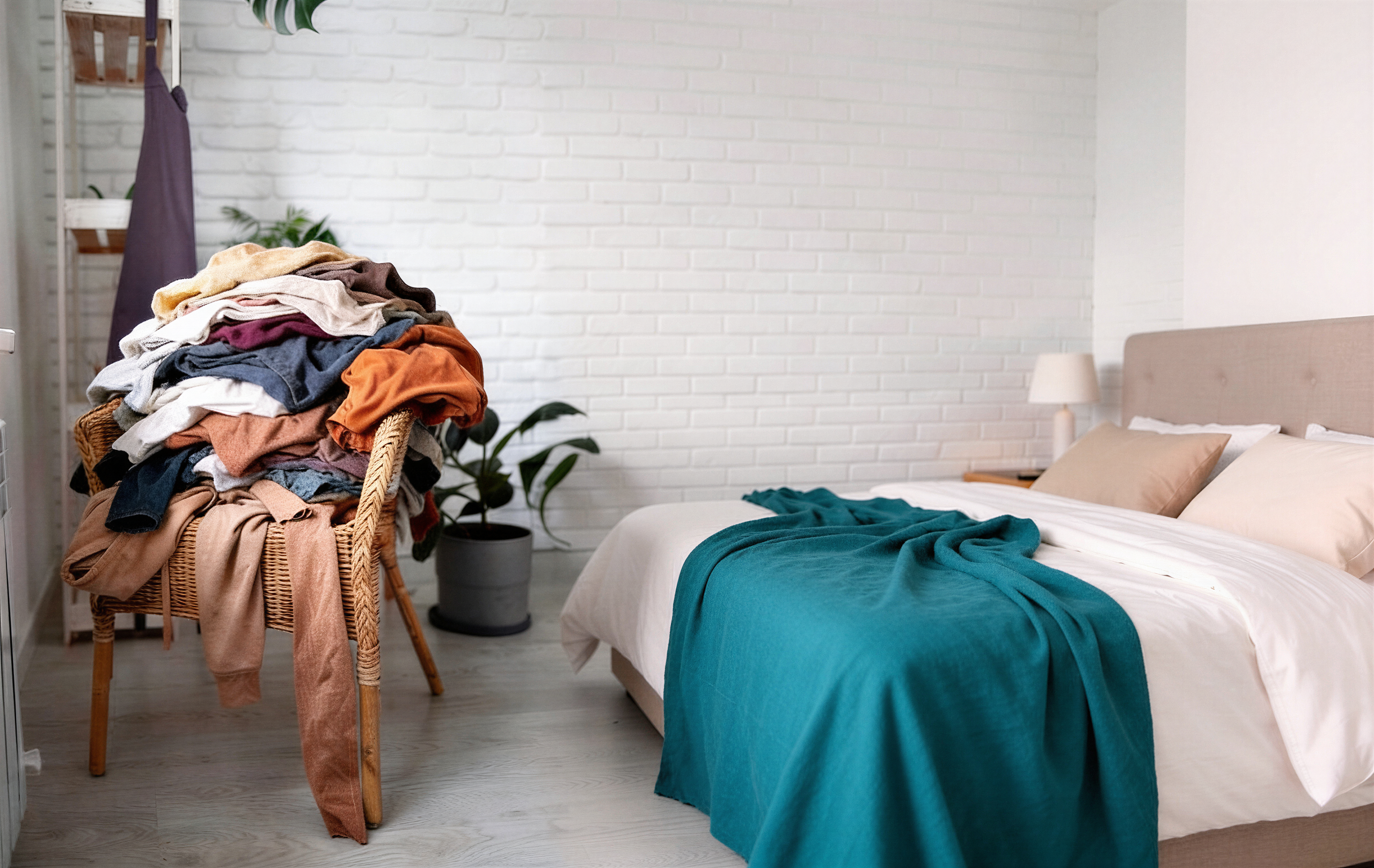
    The chair that holds:

    • The jeans you’ll wear again
    • The hoodie that’s “still clean enough”
    • The shirt you forgot about
    • The jacket you might need tomorrow
    • Three outfits currently waiting for a decision

    Officially, it’s furniture.

    Unofficially, it’s the largest storage system in New York City.

    And somehow, despite countless attempts to eliminate it, the clothes chair always returns.

    The Chair Is Everywhere

    You can find it in:

    • Studio apartments
    • Luxury condos
    • Shared apartments
    • Family homes
    • College dorms

    Income doesn’t matter.

    Square footage doesn’t matter.

    Even people with perfectly organized closets somehow end up creating one.

    It’s one of the few things that truly unites New Yorkers.

    Why Does The Chair Exist?

    Because life is busy.

    The clothes chair isn’t usually about mess.

    It’s about convenience.

    Most items on the chair aren’t dirty.

    But they’re not completely clean either.

    So they end up in a strange middle ground.

    Not ready for the laundry.

    Not ready for the closet.

    The chair becomes a temporary solution.

    At least that’s the plan.

    Why Temporary Becomes Permanent

    Modern life runs on postponed decisions.

    We’ll answer that email later.

    We’ll return that call later.

    We’ll organize the closet later.

    We’ll deal with the chair later.

    The problem is that “later” rarely arrives.

    Especially in New York City.

    Between work, commuting, social plans, errands, family obligations, and trying to enjoy the city, small decisions accumulate.

    The chair becomes a physical reminder of all the things waiting for attention.

    The FIFA Effect

    Picture this.

    It’s summer.

    The match is on.

    Friends come over.

    Snacks appear.

    The apartment feels alive.

    Then halftime arrives.

    You glance across the room.

    And there it is.

    The chair.

    Quietly holding half your wardrobe while the world’s biggest football tournament plays in the background.

    It’s almost impressive.

    No matter what’s happening in life, the chair remains consistent.

    Some things change.

    The chair never does.

    What The Chair Really Says About Modern Life

    People often assume the clothes chair is a cleaning issue.

    Most of the time it isn’t.

    It’s a lifestyle issue.

    The chair usually represents one of three things:

    1. Decision Fatigue

    You make hundreds of decisions every day.

    The chair absorbs the ones you postpone.

    2. Lack of Time

    You know what should happen.

    You just haven’t had time to do it.

    3. Mental Overload

    The chair often appears during busy seasons of life.

    Work deadlines.

    Family responsibilities.

    Travel.

    Stress.

    The chair quietly expands as your mental bandwidth shrinks.

    Why NYC Apartments Make The Chair Worse

    Small apartments amplify everything.

    One pile of clothes in a large home might go unnoticed.

    In a small NYC apartment?

    It becomes part of the room.

    Storage limitations make every visible item feel larger than it actually is.

    This is one reason apartment organization NYC searches continue to grow.

    People aren’t necessarily trying to become minimalists.

    They’re trying to reduce visual noise.

    How To Defeat The Chair (Without Becoming A Minimalist)

    You don’t need a complete apartment overhaul.

    Start small.

    Create a “wear again” zone

    A dedicated basket or hook can replace the chair.

    Reduce decision points

    Make it easier to decide:

    • Closet
    • Laundry
    • Wear again

    Nothing else.

    Focus on consistency

    The chair doesn’t disappear because of one big cleaning day.

    It disappears because of small habits repeated regularly.

    The Real Reason People Love A Clean Apartment

    A clean apartment isn’t just about appearance.

    It’s about clarity.

    When surfaces are clear and clutter is reduced, your brain processes the space more easily.

    The apartment feels calmer.

    More spacious.

    More manageable.

    The chair is rarely the problem.

    It’s simply the most visible symptom.

    Final Thoughts

    The clothes chair has become an icon of modern apartment living because it represents something many people experience.

    Too many decisions.

    Too little time.

    Too many things competing for attention.

    So if you currently have a chair holding half your wardrobe, don’t worry.

    You’re not alone.

    You’re participating in one of New York City’s most universal traditions.

    The good news?

    Unlike city rent, this is one problem that’s actually fixable.

  • The Sunday Night AuditThe 5 Things Your Apartment Is Quietly Telling You

    The Sunday Night AuditThe 5 Things Your Apartment Is Quietly Telling You

    Sometimes the Mess Isn’t the Problem. It’s the Symptom.

    It’s Sunday night.

    The game is on.

    The weekend is almost over.

    The laundry basket is overflowing.

    There are unopened packages by the door.

    A chair has quietly transformed into a second closet.

    And somewhere between work, errands, social plans, family obligations, and trying to have a life in New York City, your apartment started sending signals.

    Most people see clutter.

    What they’re really seeing is a snapshot of how life has been feeling lately.

    Because sometimes your apartment isn’t messy because you’re lazy.

    It’s messy because you’ve been busy.

    Very busy.

    The Sunday Night Audit

    Before another week begins, take a look around.

    Not to judge yourself.

    Just to notice.

    Your apartment often reveals things you’re too busy to acknowledge.

    Here are five common signs.

    1. Overflowing Laundry = No Time for Yourself

    Laundry is one of the simplest household tasks.

    Which is exactly why it becomes so revealing.

    When laundry starts piling up, it’s often not because you don’t know how to do it.

    It’s because you’ve been spending your time elsewhere.

    Work deadlines.

    Commutes.

    Family responsibilities.

    Social commitments.

    An overflowing laundry basket often means you’ve been putting yourself last.

    The laundry isn’t the problem.

    The lack of personal time is.

    2. Constant Clutter = Decision Fatigue

    Every item left out is usually the result of a decision postponed.

    You’ll put it away later.

    You’ll organize it next weekend.

    You’ll deal with it tomorrow.

    Until tomorrow becomes next week.

    Modern life requires thousands of decisions every day.

    What to wear.

    What to eat.

    Which emails to answer.

    Which tasks matter most.

    Eventually your brain reaches capacity.

    And the apartment becomes the place where unfinished decisions accumulate.

    What looks like clutter is often decision fatigue.

    3. Unopened Packages = Mental Overload

    We’ve all done it.

    The package arrives.

    You bring it inside.

    And then it sits there.

    For days.

    Sometimes weeks.

    The issue isn’t opening the box.

    The issue is having the mental energy to deal with one more thing.

    Unopened packages often represent postponed attention.

    A physical reminder that life has been moving faster than your ability to process it.

    4. The Clothes Chair = Life in Waiting

    Every apartment seems to have one.

    The chair.

    Not quite clean.

    Not quite dirty.

    Not quite storage.

    Not quite furniture.

    The famous clothes chair has become a symbol of modern life because it represents something many people experience:

    Temporary solutions becoming permanent.

    We tell ourselves we’ll sort it out later.

    But later never gets added to the calendar.

    The chair quietly becomes evidence of how stretched our schedules really are.

    5. A Messy Entryway = Living on Autopilot

    Take a look near your front door.

    Shoes.

    Bags.

    Packages.

    Jackets.

    Keys.

    The entryway is often the first place to show signs of overwhelm.

    Why?

    Because it’s where your day begins and ends.

    When life feels rushed, items stop being intentionally placed.

    They simply get dropped.

    A chaotic entryway is often a sign that you’ve been operating in survival mode instead of intentional mode.

    Why This Feels Especially True in NYC

    New York is a city that rewards movement.

    There is always another meeting.

    Another event.

    Another train to catch.

    Another opportunity.

    Another thing to do.

    The pace is exciting.

    But it can also be exhausting.

    Many NYC apartments serve multiple purposes:

    • Home
    • Office
    • Gym
    • Dining room
    • Entertainment space

    When one space carries so many responsibilities, clutter builds faster than we realize.

    Which is why apartment organization NYC searches continue to rise.

    People aren’t necessarily looking for a cleaner apartment.

    They’re looking for a calmer life.

    What Happens When a Space Feels Under Control

    A clean apartment doesn’t solve every problem.

    But it removes friction.

    You spend less time searching.

    Less time worrying.

    Less time feeling behind.

    Your brain processes the environment more efficiently.

    The space feels lighter.

    And often, so do you.

    The Goal Isn’t Perfection

    One of the biggest misconceptions about home organization is that the goal is perfection.

    It’s not.

    The goal is creating a space that supports your life rather than competing with it.

    Especially in New York City, where your time and attention are already under constant pressure.

    Final Thoughts

    The next time you notice the laundry pile, the clutter, or the unopened package by the door, try not to see it as a cleaning problem.

    See it as information.

    Your apartment may be telling you something.

    Not about your cleaning habits.

    About your schedule.

    Your energy.

    Your priorities.

    And perhaps most importantly, whether you’ve been giving yourself enough room to breathe.

    Because sometimes the mess isn’t the problem.

    It’s the symptom.

  • A Clean Home Is Not a Luxury, It Is Part of Modern Living

    A Clean Home Is Not a Luxury, It Is Part of Modern Living

    There was a time when hiring cleaning help was considered a luxury.

    Something optional.

    Something extra.

    That time is over.

    In today’s world, especially in cities like New York, a clean home is no longer a luxury.

    It is part of how modern life functions.

    Modern Life Has Changed the Definition of “Normal”

    Life today is very different from before:

    • faster work schedules
    • higher stress levels
    • less free time
    • smaller living spaces
    • constant digital overload

    Because of this, people are no longer able to manage everything alone at the same pace.

    So expectations have changed.

    Why NYC Makes Clean Homes Harder to Maintain

    In New York City:

    • time feels limited
    • space is smaller
    • energy is stretched
    • routines are unpredictable

    Even basic cleaning becomes something that constantly needs attention.

    That’s why searches like home cleaning NYC and cleaning service near me NYC are now part of everyday behavior, not occasional need.

    Clean Homes Are Now a Mental Health Requirement

    A clean home is no longer just visual.

    It directly affects:

    • stress levels
    • focus
    • emotional stability
    • sleep quality
    • productivity

    Your environment and your mental state are now connected.

    When one is unstable, the other follows.

    The Shift From Luxury to Essential

    A decade ago:

    Cleaning services were considered optional.

    Today:

    They are part of maintaining balance in daily life.

    Because the real luxury is no longer “having help.”

    It is having time.

    What a Modern Clean Home Really Means

    It doesn’t mean perfection.

    It means:

    • no constant clutter buildup
    • manageable daily living
    • reduced stress environment
    • predictable cleanliness level
    • a home that supports your routine

    This is why professional cleaning service NYC is becoming a standard part of urban living.

    5 Reasons Clean Homes Are Now Essential

    1. Time is more limited than ever

    People cannot afford long cleaning cycles.

    2. Mental clarity depends on environment

    Clutter increases cognitive overload.

    3. Work-from-home changed everything

    Home is now also an office.

    4. Small spaces require more upkeep

    Less space = faster mess accumulation.

    5. Quality of life is tied to surroundings

    Your home affects your daily experience.

    Why This Shift Is Permanent

    This is not a trend.

    It is a structural change in how people live in cities.

    Modern life requires systems that reduce stress, not add to it.

    A clean home is now part of that system.

    FAQ

    Is cleaning still considered a luxury?

    Not in cities like NYC. It is now a lifestyle necessity.

    Why are cleaning services becoming more popular?

    Because time, space, and energy constraints have increased.

    Does a clean home affect productivity?

    Yes. Clean environments improve focus and reduce mental fatigue.

    Final Thoughts

    A clean home is no longer something extra.

    It is part of modern survival in fast-paced cities.

    Especially in New York, where life moves quickly and space is limited.

    The home is no longer separate from life.

    It is part of how life works.

  • Why Recurring Cleaning Works Better Than Catch-Up Cleaning

    Why Recurring Cleaning Works Better Than Catch-Up Cleaning

    Most people don’t have a cleaning problem in NYC.

    They have a catch-up problem.

    They wait until things pile up.

    Then spend hours fixing everything at once.

    Then repeat the same cycle again.

    This is the part that drains people the most, not cleaning itself, but constantly trying to catch up.

    The Catch-Up Cleaning Cycle (Why It Feels Exhausting)

    Catch-up cleaning usually looks like this:

    You ignore small messes during the week.

    Work gets busy.

    Energy runs out.

    Then the weekend becomes a full reset:

    • deep cleaning
    • laundry overload
    • organizing everything
    • scrubbing all at once

    By the end, the apartment is clean…

    but you’re exhausted.

    This is why many people in NYC search for apartment cleaning NYC solutions, because they are stuck in this loop.

    Why NYC Makes Catch-Up Cleaning Worse

    In New York City, everything accelerates:

    • smaller apartments
    • faster routines
    • less free time
    • constant movement

    So mess doesn’t build slowly.

    It builds continuously.

    That’s why catch-up cleaning never feels like “catching up.”

    It feels like restarting from zero every time.

    What Recurring Cleaning Actually Changes

    Recurring cleaning removes the “reset pressure.”

    Instead of letting mess build up:

    You maintain a baseline level of cleanliness.

    So your home never drops into chaos.

    It becomes:

    • stable
    • predictable
    • manageable

    This is why searches like recurring cleaning NYC vs one-time cleaning are increasing, people are realizing the system matters more than effort.

    Why Recurring Cleaning Feels Lighter (Even Though It Happens More Often)

    This is the part people don’t expect:

    Cleaning more often actually feels easier.

    Because:

    • no buildup
    • no overwhelm
    • no heavy weekend cleaning
    • no decision fatigue

    You are no longer fixing problems.

    You are maintaining order.

    The Mental Difference Between the Two

    Catch-up cleaning feels like:

    • pressure
    • exhaustion
    • “I have so much to do”

    Recurring cleaning feels like:

    • control
    • structure
    • calm routine

    Your brain reacts differently because the workload is predictable instead of overwhelming.

    Why People Stay Stuck in Catch-Up Mode

    Because it feels normal.

    Until it doesn’t.

    Most people don’t realize there is another system.

    They think:
    “I just need to clean more.”

    But the real answer is:
    “I need to clean differently.”

    5 Reasons Recurring Cleaning Works Better

    1. Prevents buildup before it becomes overwhelming

    No more extreme cleaning days.

    2. Saves time overall

    Less effort per session.

    3. Reduces stress and mental load

    No constant “I still need to clean” thoughts.

    4. Keeps your home consistently presentable

    Not just occasionally clean.

    5. Improves lifestyle balance

    Less cleaning stress, more free time.

    The Shift NYC Residents Are Making

    More people are switching from:

    Catch-up cleaning → recurring cleaning service NYC

    Because time has become more valuable than effort.

    And consistency beats intensity.

    FAQ

    Why is recurring cleaning better than deep cleaning?

    Because it prevents buildup instead of reacting to it.

    How often should recurring cleaning be done in NYC?

    Most homes benefit from weekly or bi-weekly cleaning.

    Is catch-up cleaning bad?

    No,  but it is inefficient for long-term consistency.

    Final Thoughts

    Recurring cleaning doesn’t just clean your home.

    It changes your relationship with it.

    From something you constantly fix…

    to something that stays under control.